



It’s Friday, June 12, 2026, and Anjali Singh Code is back at Flint Hill. Nearly two and a half decades after her own graduation, she has returned to the commencement stage as this year’s distinguished alumni speaker.
In almost every graduating class, it’s easy to name the students destined for such a moment — the academic prodigies and high flyers whose future success is a foregone conclusion to everyone around them.
In 2002, Anjali was not one of them. By her own admission, she flew well below the radar — a reality she shares openly with the audience as she begins her address.
“I am speaking to you as someone who was probably one of the least likely from the Class of 2002 to be invited back to give a graduation speech. And I mean that sincerely.”
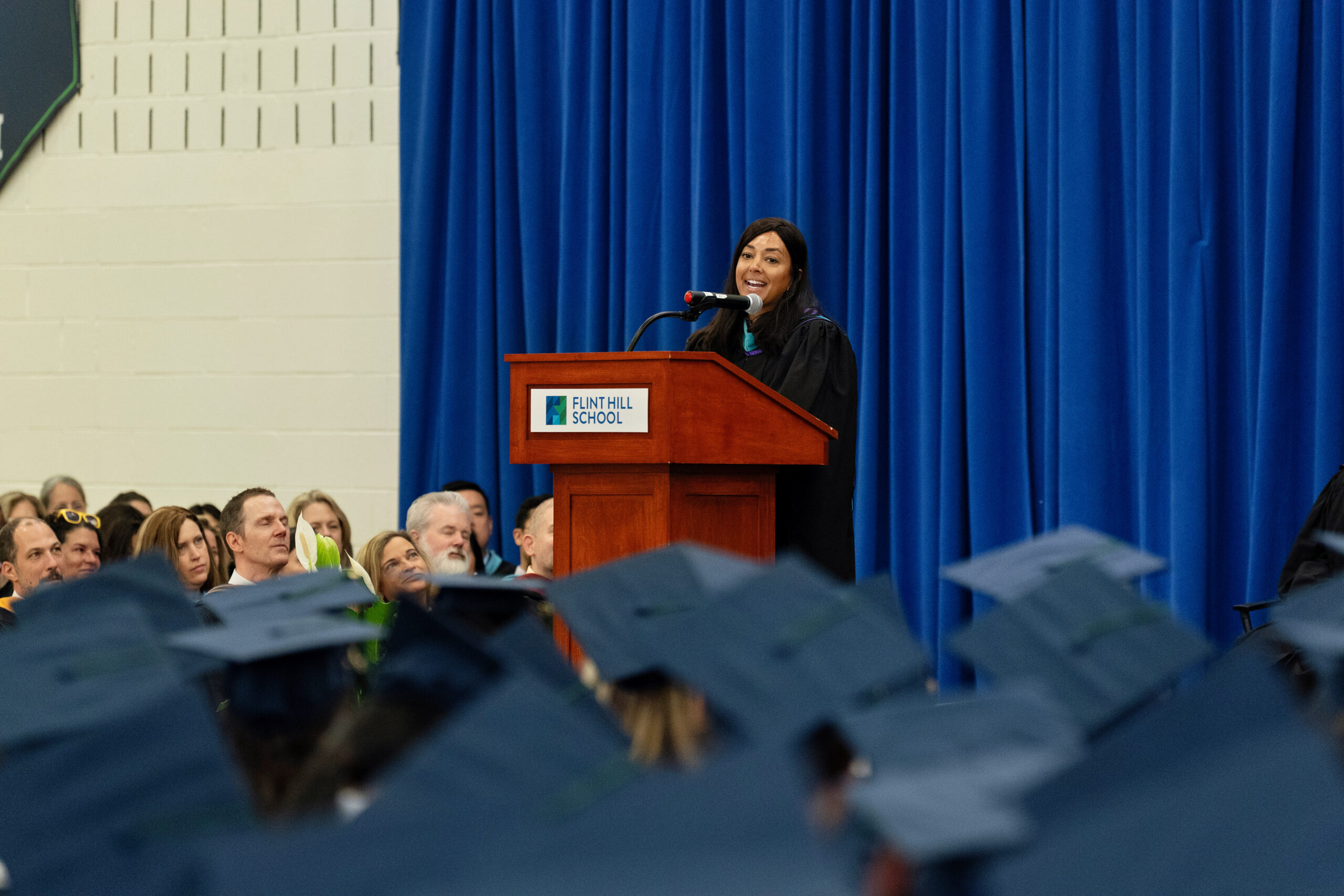
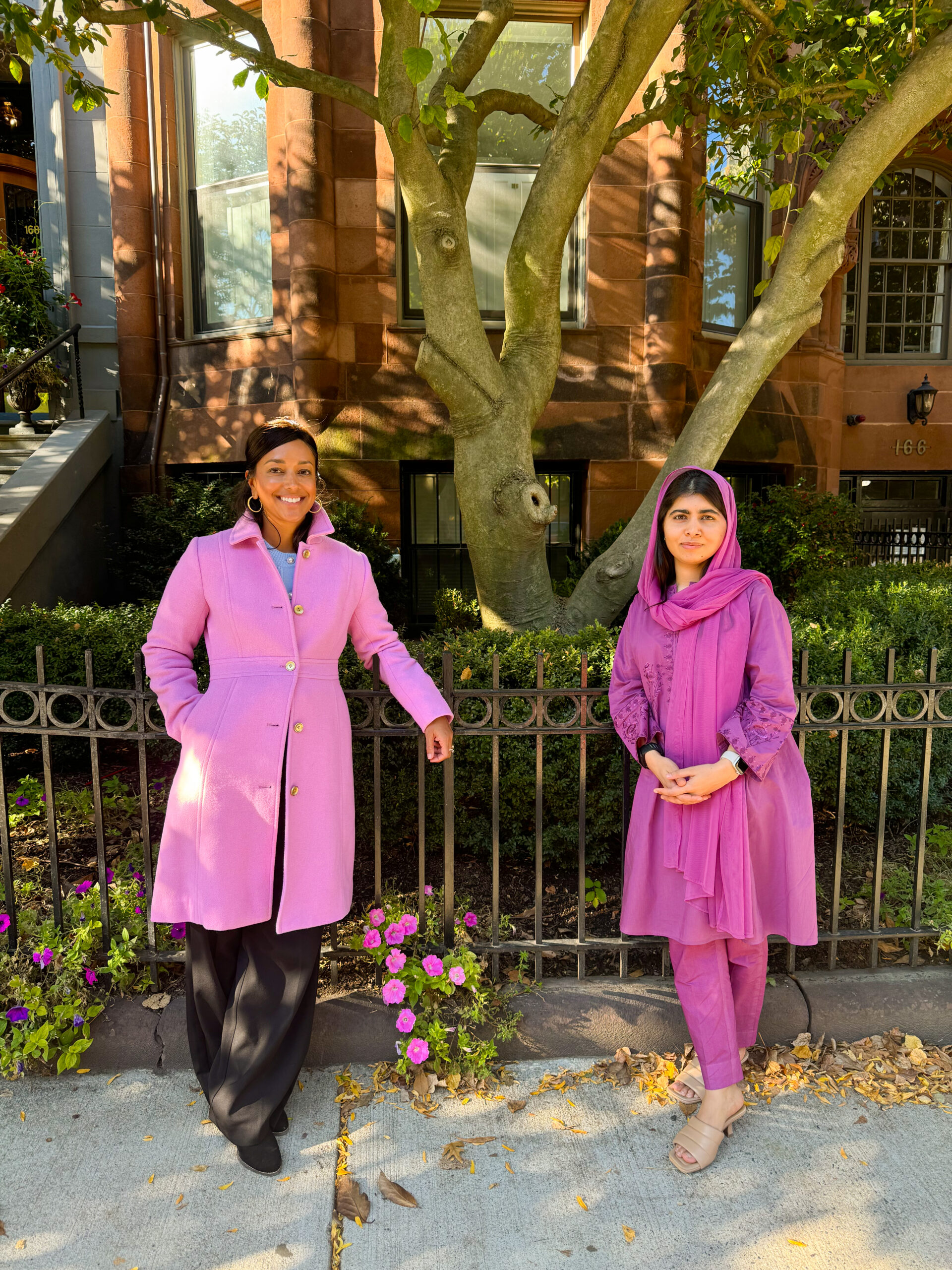
Those are unexpected words from such a decorated powerhouse in her field. Anjali has built an impressive reputation in the nonprofit world for translating the grand visions of world-renowned activists into highly structured, operationally solvent realities. Her impactful career includes working with Nobel Peace Prize Laureate Nadia Murad to support survivors of genocide and alongside Nobel Peace Prize Laureate Malala Yousafzai in her current role as Chief Growth Officer at the Malala Fund, championing girls’ education globally.
But Anjali isn’t standing at the podium as the high-achiever she is today. Instead, she speaks as a reflection of the perfectly average student she was back then, proving to the grads that it’s okay if their own superpowers haven’t yet been revealed.
“When I was a student here, I never once walked across this gym floor to be recognized for honor roll. I was never the best athlete or team captain. I was not a standout artist, musician, performer, or scholar,” she says. “You are not limited by who people think you are right now. In fact, you are not even limited by who YOU think you are right now.”
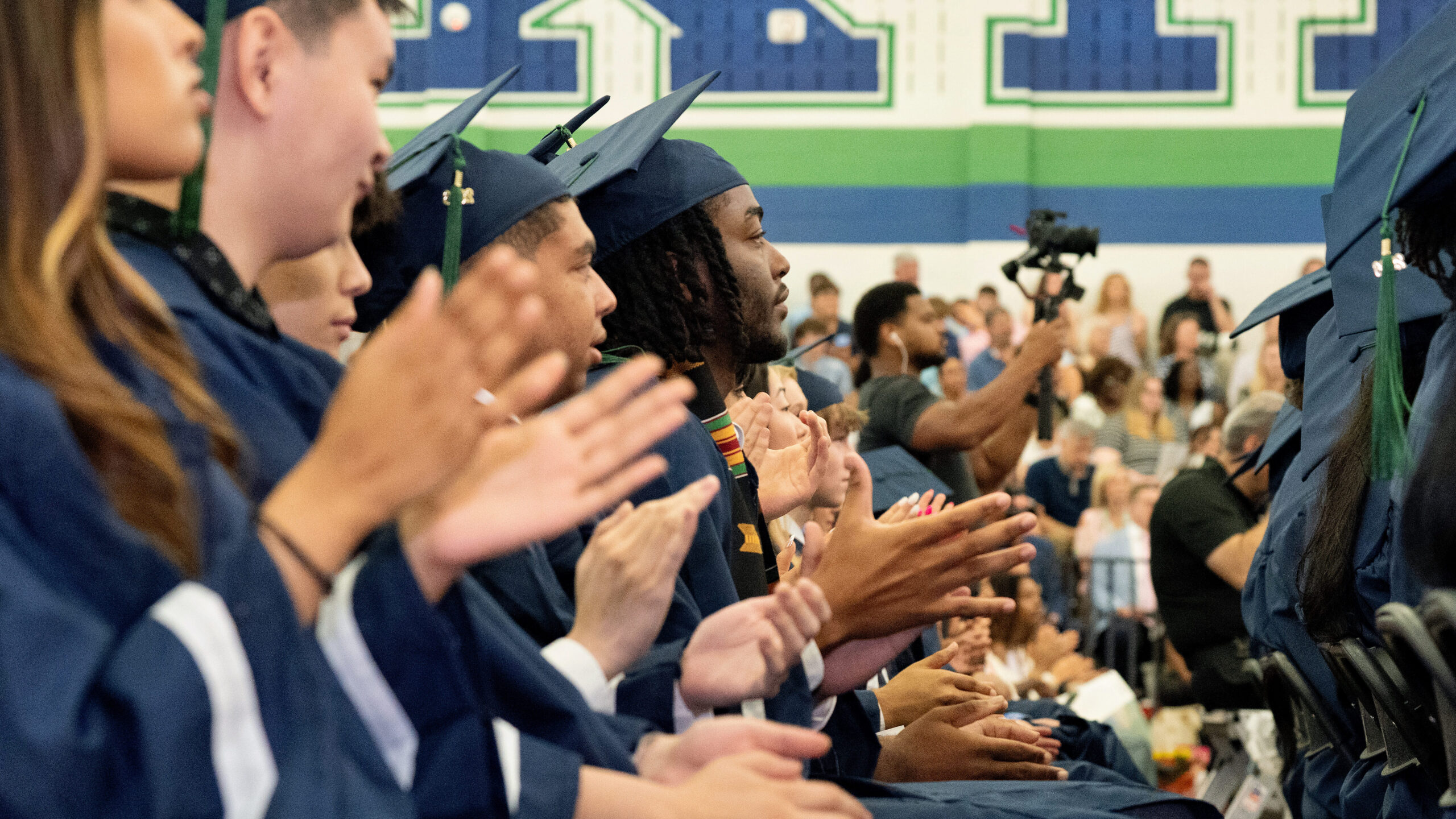
As a 9th grader at Flint Hill, Anjali faced the challenges of being the “new kid” for the very first time. Having spent her entire childhood in the relaxed, nature-filled environment of Burgundy Farm Country Day School, stepping onto Flint Hill’s newly opened, state-of-the-art Upper School campus was a leap into the unknown.
“I remember having a hard time at first,” Anjali recalls. She focused her energy on building relationships — forging close friendships on the track team, joining the Student Council Association (SCA), and singing with the Major Minors (a cappella group). While she found community over time, the academic terrain remained an uphill battle.
In a school culture that celebrated accolades and high GPAs, Anjali quietly navigated learning disabilities and severe test anxiety. Her academic momentum shifted when she walked into Flint Hill’s Learning Center. There, an educator named Mrs. Maureen McLaughlin provided the patience, care, and understanding she needed to learn how her brain worked and to build confidence in the classroom.
While her high school transcript didn’t necessarily reflect excellence, her work ethic did. The foundation had been poured at Flint Hill, and when the hard work landed Anjali at American University, the habits she forged through high school finally clicked. “I had figured it out over those four years at Flint Hill,” she says. “Where I’m standing now, there is pride because it wasn’t automatic.”
While at AU, Anjali immersed herself in the human side of service, logging 10,000 hours on a suicide hotline and completing various mental health internships. She excelled academically, graduating magna cum laude with a bachelor’s in psychology, and went on to work at the Barker Foundation, an adoption nonprofit in the DMV.
There, she noticed a critical flaw in the sector: Organizations were filled with brilliant minds and boundless hearts, but often lacked the foundational business acumen to remain financially solvent, manage initiatives, and prevent employee burnout. Driven by a desire to fix that operational gap, she pursued a master’s in public administration at NYU. She sought to help marry passion with execution, asking a fundamental question: “This sounds good in theory, but what does it look like in practice?”
That combination of deep empathy and pragmatic operational execution launched her into high-stakes leadership. She began in Mayor Michael Bloomberg’s administration in New York City, promoting child welfare and juvenile justice, before transitioning to the UN Foundation in D.C. There, she was instrumental in the “Nothing But Nets” malaria awareness campaign, overseeing fundraising programs that brought in $3 million annually. To scale public engagement even further, she spearheaded the campaign’s celebrity ambassador program, utilizing stars like NBA star Stephen Curry to amplify the cause.
For Anjali, fundraising work has never been about the numbers, but about building community and movements — inspiring people to feel like they are part of a winning team fighting for a shared conviction.
“The core throughline in my work is that no matter where you’re born, you should be afforded basic human rights,” she says. “And you can’t underestimate pure grit. If you care, and you keep trying, you can do a lot.” This pairing defines her career — while a passion for universal human rights fuels her purpose, it is her sheer grit that allows her to succeed at the execution. That determination proved to be the ultimate asset for her most impactful chapter yet: turning the grand visions of global activists into reality.
“All evidence shows that when you invest in girls, you’re investing in the community at large.”
Anjali Singh Code ’02
In 2019, she joined Nadia’s Initiative, working alongside Nobel Peace Prize Laureate Nadia Murad to support survivors of the 2014 ISIS genocide in Iraq. While Nadia provided the vision and funding, Anjali focused on the behind-the-scenes logistics — building the budgets, plans, and structures needed to turn that Nobel Prize seed money into lasting local programs. The team built their mission on a vital principle: Survivors shouldn’t just receive aid, but should be empowered to lead the rebuilding of their own communities.
Today, Anjali is shaping systemic change on an even broader scale as Chief Growth Officer at the Malala Fund. Under her leadership, the organization has shifted its macro strategy from direct-action service, like building individual schools, to dismantling systemic global barriers such as child marriage, conflict zones, and shrinking education budgets. Instead of relying on top-down aid, the Malala Fund champions a localized model that funds civil society leaders who are closest to the issues in countries like Afghanistan, Pakistan, and Nigeria.
“All evidence shows that when you invest in girls, you’re investing in the community at large,” Anjali explains.
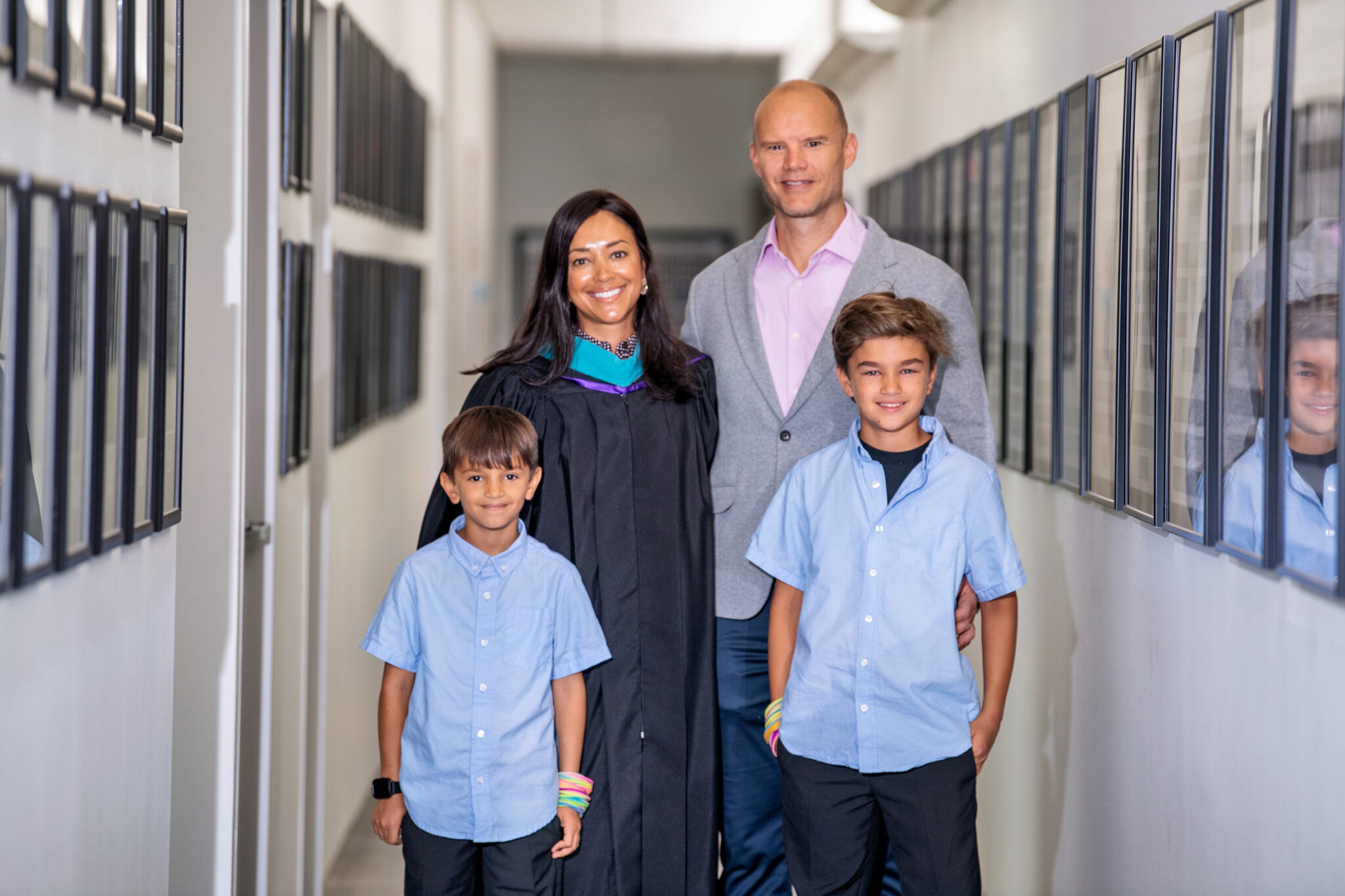
“It’s not easy,” Anjali admits. “I have two kids, a husband, aging parents, and I’m helping manage this huge organization. But when you are working for people like Nadia and Malala, you look at your own challenges and ask — what’s your excuse?”
Anjali recalls a recent flight home from Tanzania where she broke into tears after a whirlwind of intense meetings. She sat alongside Malala Yousafzai as young girls articulated their plea for nothing more than the basic right to finish school and to marriage autonomy.
“It’s heavy, man,” Anjali reflects. “These girls have to fight through extraordinary barriers to fight for rights kids in this country take for granted.”
Standing before the Commencement crowd, Anjali draws a beautiful parallel between the futures those young girls so desperately fight for and the boundless future awaiting the Class of 2026, centering her message on the transformative weight of their degrees. “Education gives people choices, dignity, and power over their own futures,” she notes, shifting the graduation from a celebration of the past into a mandate for tomorrow. “Today is not just the end of your time at Flint Hill. It is the beginning of what you will do with everything Flint Hill has given you.”
For a gymnasium full of teenagers standing on the precipice of adulthood, her parting words are a liberating reminder that life is rarely a straight, predictable line. No one from Anjali’s class would have predicted her future, and she implores the grads to stay open to the possibilities.
“You are capable of growth. You are capable of change. You are capable of becoming more than you may be able to imagine right now,” Anjali says, looking out at the next generation of world changers. “So Class of 2026, do not worry if you do not have it all figured out today. You are not finished becoming.”